

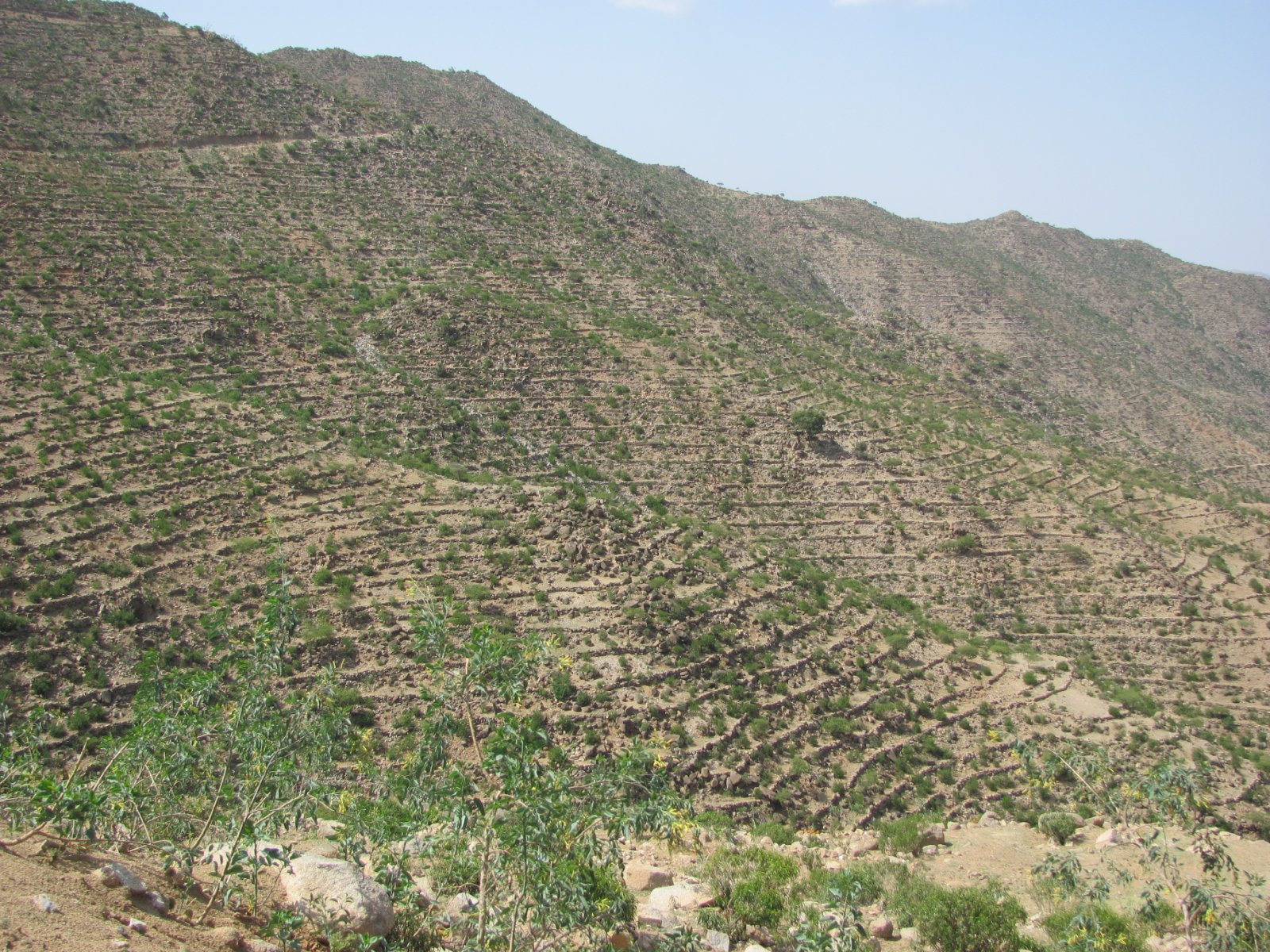
Terraced highlands, Eritrea
Our Investment Approach
The highest development additionality of any market — and the highest barriers to investment. Why that is, and what I4P does about it.
Why it is hard
The barriers are structural, not temporary
Fragile and conflict-affected settings offer the highest development additionality and the highest barriers to investment. Investors face structural constraints, including:
- Elevated political and operational risk
- Limited pipeline depth
- Small ticket sizes
- High transaction costs
- Weak early-stage investment ecosystems
Capital that does arrive concentrates in the lower-risk segments and is, at best, guided by conflict-sensitivity and do-no-harm approaches — leaving systemic fragility unaddressed.
Lessons from fragile-states investing
We know what we are walking into
I4P’s team has spent careers investing in these markets, and that experience resonates strongly with the lessons drawn by development finance institutions over the years — set out most candidly by British International Investment. The approach below is built around them.
1Ticket sizes are small
Most fragile economies cannot absorb large amounts of capital; the viable opportunities are at $5 million or less, often reached through country-focused intermediaries.
2Market intelligence must be continuously validated
Weak institutions and tight links between political and economic power make these markets hard to read. Even deep institutional knowledge has to be checked against trusted local sources.
3People matter more than anything else
Partner quality is the most consistent determinant of outcomes — finding trusted local actors who can reach stakeholders and navigate the political terrain.
4There is no template for a trusted partner
Context dictates the partner profile: an international principal in one country, nationals with deep local networks in the next.
5Pipeline development takes far longer than expected
From first meeting to investment is a long, deliberate courtship — often years, and many conversations for each deal that closes.
6Sector diversification is a necessity, not a preference
Conventional sector priorities yield to what is viable on the ground. Investment follows unmet demand, wherever it is.
7ESG and integrity risks are structurally higher
More, and more complex, environmental, social and business-integrity issues are a baseline condition here, not an exception to be managed case by case.
8Small deals still need large-project safeguards
Integrity and E&S resourcing cannot track ticket size; small investments routinely require the same depth of scrutiny as large ones.
9Volatility must be built into the structure from the outset
Exit timelines are unpredictable and long. Time horizons and instruments have to allow for that from day one.
10Adaptability is the single unifying lesson
Every element of the approach — engagement, structuring, hands-on support — has to be built for adaptation, with the courage to be a pathfinder.
What I4P does differently
Expanding what is investable
Rather than compete for the few “bankable” deals, I4P builds diversified portfolios of investments that are:
- Financially viable
- Structurally de-risked — blended finance absorbs the risks other investors cannot
- Conflict-sensitive — designed to contribute to mitigating identified drivers of conflict, with progress measured over time
- Positioned to become increasingly ready for DFI and commercial investment
One process
Commercial and peace considerations, assessed together
Peace impact is not a separate workstream bolted on at the end. Commercial viability and an investment’s contribution to peace are assessed together at every stage — origination, screening, due diligence, structuring and portfolio management — by one investment team.
Where we invest
Geographies
While I4P’s mission is to address drivers of conflict in fragile and conflict-affected settings globally, in its current phase it focuses on Africa.
I4P’s eligible universe is defined by rule, not by preference: countries on the World Bank list of conflict-affected and fragile situations, priority countries of the UN Peacebuilding Fund, or both. It is reviewed and updated annually, and the actual focus in any country is set by that country’s strategy.
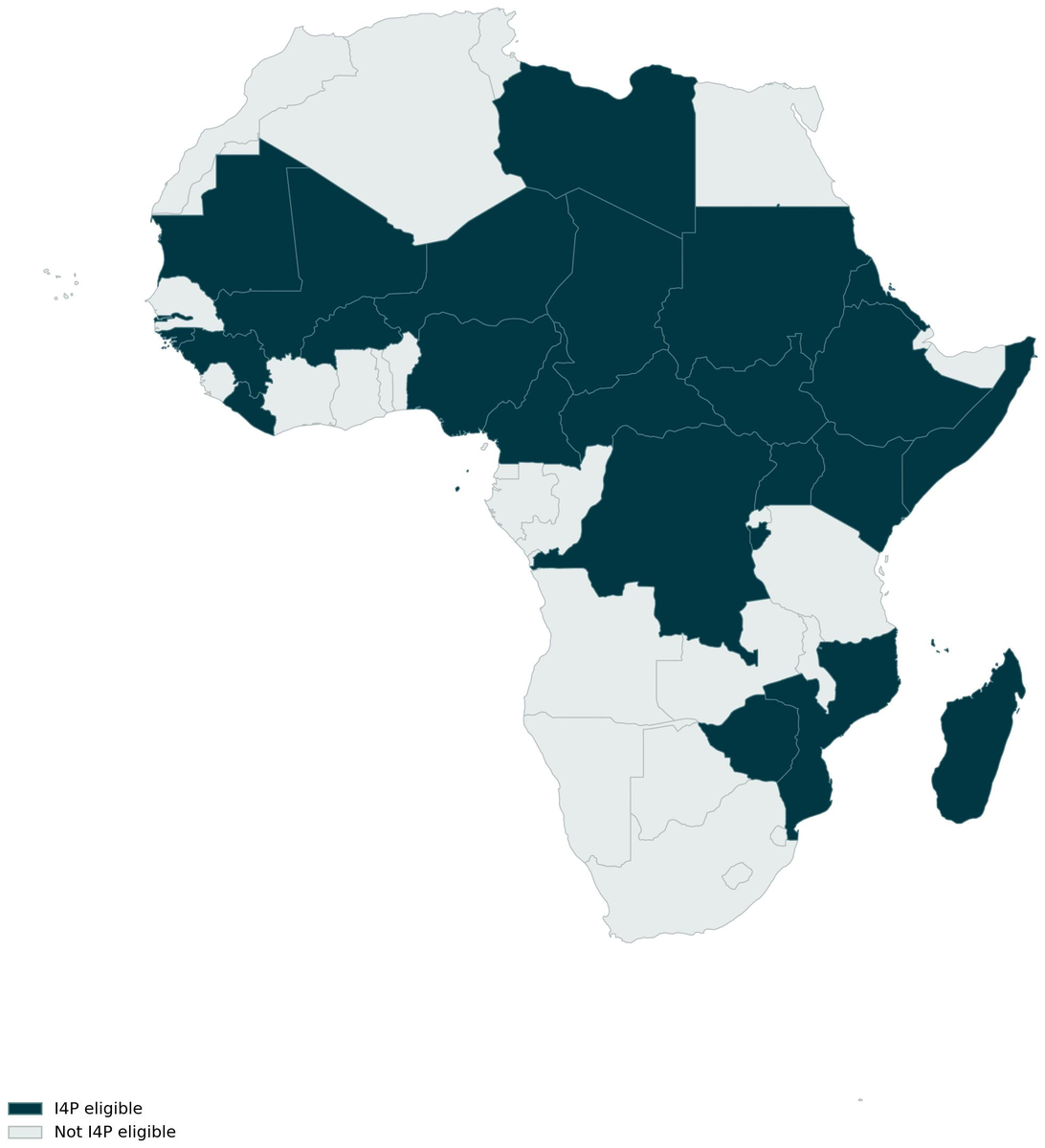
The current eligible universe of countries (Investment Policy, June 2026 — subject to annual review)
- Burkina Faso
- Burundi
- Cameroon
- Central African Republic
- Chad
- Comoros
- Democratic Republic of the Congo
- Eritrea
- Ethiopia
- The Gambia
- Guinea
- Guinea-Bissau
- Kenya
- Liberia
- Libya
- Madagascar
- Mali
- Mauritania
- Mozambique
- Niger
- Nigeria
- São Tomé and Príncipe
- Somalia
- South Sudan
- Sudan
- Uganda
- Zimbabwe
Exclusions. Jurisdictions subject to sanctions regimes are treated by I4P as high risk, and I4P ensures that its investments do not violate existing sanctions. The regimes I4P is guided by are UN Security Council sanctions, the EU Consolidated Financial Sanctions List, the U.S. OFAC Sanctions List and the UK Sanctions List.